
Trials
A Fifth Circuit committee ordered Judge Ada Brown to a psychiatric exam, and the council reassigned her docket.
On Sept. 29, 2026, the Judicial Council of the Fifth Circuit ordered that U.S. District Judge Ada E. Brown's current cases be temporarily reassigned and that she be kept off the new-case wheel for three months or until further order, whichever comes first. The special committee had ordered an independent psychiatric examination on Sept. 21. In the public order, the name in the racial-insults item is blacked out.
By Crime Talk Network Staff Writer · · Updated
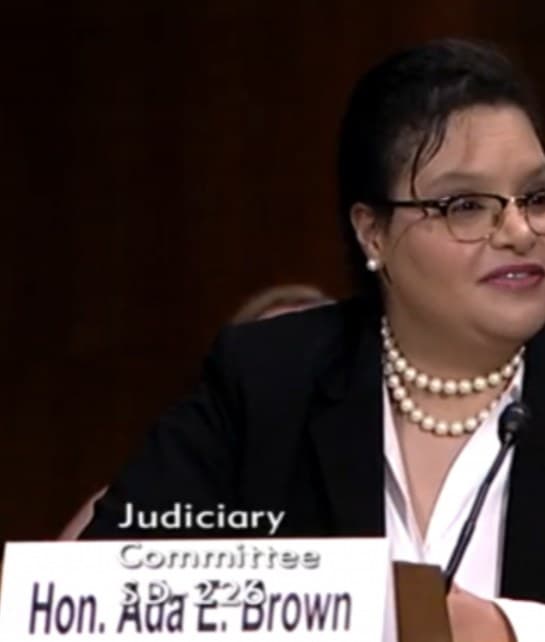
The Sept. 29 order is an administrative reassignment under 28 U.S.C. § 332(d). It is not a medical diagnosis, and the order says it is separate from whatever the council does when the committee files its report. Judge Haynes abstained, and Chief Judge Debra Brown voted no on procedural grounds. Bloomberg Law, the ABA Journal, and Fox News identify the lawyer in the redacted hearing item as Ezra Young.
The Judicial Council of the Fifth Circuit, in an order filed Sept. 29, 2026, ordered that for three months or until further order of the council, whichever comes first, Judge Ada E. Brown's current cases be temporarily reassigned and that she be excluded from the rotation of new case assignments. The order says that step is necessary and appropriate for the effective and expeditious administration of justice in the circuit, citing 28 U.S.C. § 332(d). It says the reassignment is independent of any action the council may take in the ongoing complaint, and that the council will consider the complaint once it has the committee's report. Chief Circuit Judge Jennifer Walker Elrod signed it. A footnote says Judge Haynes abstained, and that Chief Judge Debra Brown voted against the recommendation on procedural grounds. A temporary reassignment is not an order removing a district judge from office.
The order says that on Aug. 11, 2026, Chief Judge Elrod appointed a special committee of Circuit Judge James E. Graves Jr., Chief District Judge Alia Moses, and herself to investigate a complaint under 28 U.S.C. § 351 that raised a concern Judge Brown suffers from a mental condition that renders her unable to discharge the duties of office. It says the committee's report had not yet been filed. It says the committee determined there is a reasonable basis to conclude she suffers from a temporary or permanent mental condition that interferes with her ability to perform the responsibilities of her office. KERA, in a story by Dylan Duke published Oct. 21, 2026, at 10:02 a.m. CDT, reported that the committee found behavior it said shows she is suffering from a mental condition. A reasonable basis to conclude, which the order uses, and a finding that she is suffering, which KERA uses, are not the same sentence. The order's listed conduct includes failing or refusing to communicate with chambers staff or manage the docket, recusing from over 40 cases since June 1, 2026, sometimes without explanation or for unusual reasons, unsubstantiated claims that orders were being entered or altered without her permission or with criminal intent, a request that those claims be investigated by the Texas Rangers, racial insults to judges and court staff, copious and bizarre emails, announcing an intent to resign and rescinding it at least twice since June 30, 2026, refusing to return to work to protest the clerk's office not entering a recusal letter on an MDL case no longer assigned to her, and refusing to meet with Chief Judge Elrod and Chief Judge Reed C. O'Connor. KERA printed 40 recusals, not over 40. Over 40 and 40 are not the same count.
The second item on that list says she engaged in "demonstrably egregious and hostile treatment of others by making aberrant and inappropriate comments, including racial insults," toward a person whose name is blacked out, in a hearing whose date is blacked out. The order does not print the name Ezra Young. The ABA Journal, in a story by Kevin Davis published Oct. 29, 2026, at 9:23 a.m. CDT, reported that Bloomberg Law found the complaint grew out of an April hearing in which Judge Brown directed racial insults at attorney Ezra Young, who represented a Black woman professor suing over a tenure denial. The ABA Journal reported she accused him of mistreating Black attorneys, took judicial notice of her own background, and referred to Young, who is Latino, as white. It printed this from the transcript: "I think what's happening here, quite candidly, is you are very intimidated for some reason, Mr. Young, with Black excellence, in light of your white mediocrity. Yeah. Right?" and "You should write that down. I mean, you—I'm—you look like a white man, right?" It reported Young replied, "I'm not white, your honor," and said he is Latino. Fox News, in a story by Elaine Mallon published Oct. 30, 2026, at 9:18 a.m. EDT, reported an additional line from the transcript Bloomberg obtained: "You're the White savior, come to save all the stupid Black lawyers in Texas who need your help from New York." Fox News said the professor's suit was against Southern Methodist University and that Young filed a May judicial-conduct complaint after the judge had revoked his permission to practice in her court. The ABA Journal did not print Southern Methodist University or the month of May. A blacked-out name in the council order and a name printed by those outlets are not the same level of identification.
The Sept. 29 order says that on Sept. 21, 2026, the committee ordered Judge Brown to submit to an independent psychiatric examination within 30 days and to say within seven days whether she would comply. It says she failed to respond within seven days and that, as of that order, the 30-day window had not yet expired. KERA reported Oct. 21 that she failed to respond and does not appear to have taken the examination. A missed seven-day notice, which the Sept. 29 order records, and an examination that does not appear to have happened, which KERA reported on the 30th day, are not the same fact. The order also says she failed to attend a Sept. 21 meeting in Dallas and that no attorney had appeared for her. Fox News reported that in a July 28 response she wrote, "I do not believe my demeanor was inappropriate at any time, especially during the candid conversations about race," and that she asked the chief judge to weigh her candor and her commitment to being mentored by senior judges. An order for an examination is not a diagnosis.
A special-committee order filed Oct. 20, 2026, in complaint number 05-26-90196, the complaint identified by Chief Judge Elrod, says that on Oct. 16 the committee ordered Judge Brown to appear in person on Friday, Oct. 30, 2026. It says that in an email at about 1:26 a.m. on Oct. 17 she wrote that she declines to take part in either complaint, that she has waived all confidentiality, and that she tendered certain orders to the press. It says she attached confidential documents from that proceeding and from an earlier complaint filed May 14, 2026, plus sealed documents from two attorney-discipline matters the committee called seemingly unrelated, and that she sent them to approximately 140 judges, lawyers, and members of the press. The Sept. 29 order's separate reference to over 140 emails produced to the council is not that same count of recipients. The Oct. 20 order says the committee does not know what parallel investigation she has cited, and it ordered a written response by 5 p.m. on Tuesday, Oct. 27, 2026. The Oct. 19 statement of the Judicial Council said she disseminated confidential materials early on Oct. 17, including to the press, and that the council then voted to make certain materials public. A written refusal to appear is what the Oct. 20 order records. It is not a minute entry of whether she was in the room on Oct. 30. All defendants are presumed innocent until proven guilty in a court of law.
Shop
Checkout is on Shopify. A few from the rack:
More on the desk

By Crime Talk Network Staff Writer
Judge Trevor McFadden took James Comey's motion to dismiss the Espionage Act information under advisement.
An information is a prosecutor's charging document. It is not a grand-jury indictment, and it is not a conviction. McFadden did not grant or deny the motion on Friday. The fight is whether filing that information on the last day of a 10-year limitations period lets the government keep seeking an indictment, and the two accounts do not print the same thing about whether prosecutors are in front of a grand jury now.
Read the take
Reporting noted by CBS News and MS NOW.
By Crime Talk Network Staff Writer
Federal prosecutors charged Hanh Minh Nguyen with animal crushing in the Santa Ana puppy case.
The federal count is a criminal complaint for animal crushing, and the Orange County counts are felony accusations. Neither is a conviction, and she has not been sentenced in either court. The District Attorney's release says the puppy was 9 weeks old and that she was arrested Thursday, Oct. 2. CBS Los Angeles says the puppy was about 9 months old and that she was arrested Oct. 1. Those ages are not the same age, and those dates are not the same date.
Read the take
Reporting noted by CBS Los Angeles, City News Service, Orange County District Attorney, and NBC Los Angeles.
By Crime Talk Network Staff Writer
Judge Brantley Starr sentenced Jamarian Hewitt to 447 months in the Operation Blue Laces case.
Wednesday's 447 months is the sentence Judge Brantley Starr imposed on the April jury verdict. FOX 4's age of 39 and the verdict announcement's age of 40 are not the same number, and the two accounts do not print the same list of counts. The verdict announcement had set sentencing for Aug. 12, and the term reported this week was imposed Oct. 28.
Read the take
Reporting noted by Dallas Morning News, FOX 4, and U.S. Attorney's Office for the Northern District of Texas.