
True Crime
Murdaugh's lawyers asked the court to turn over DNA, ballistics, and the raw Moselle scan. A motion is not an order.
On Sept. 18, 2026, Richard Alexander Murdaugh's defense moved to compel fingernail and phone DNA, .300 Blackout ballistic records, and the raw FARO scan of the crime scene before a retrial set to begin April 5, 2027. The court has not ruled on that motion.
By Crime Talk Network Staff Writer ·
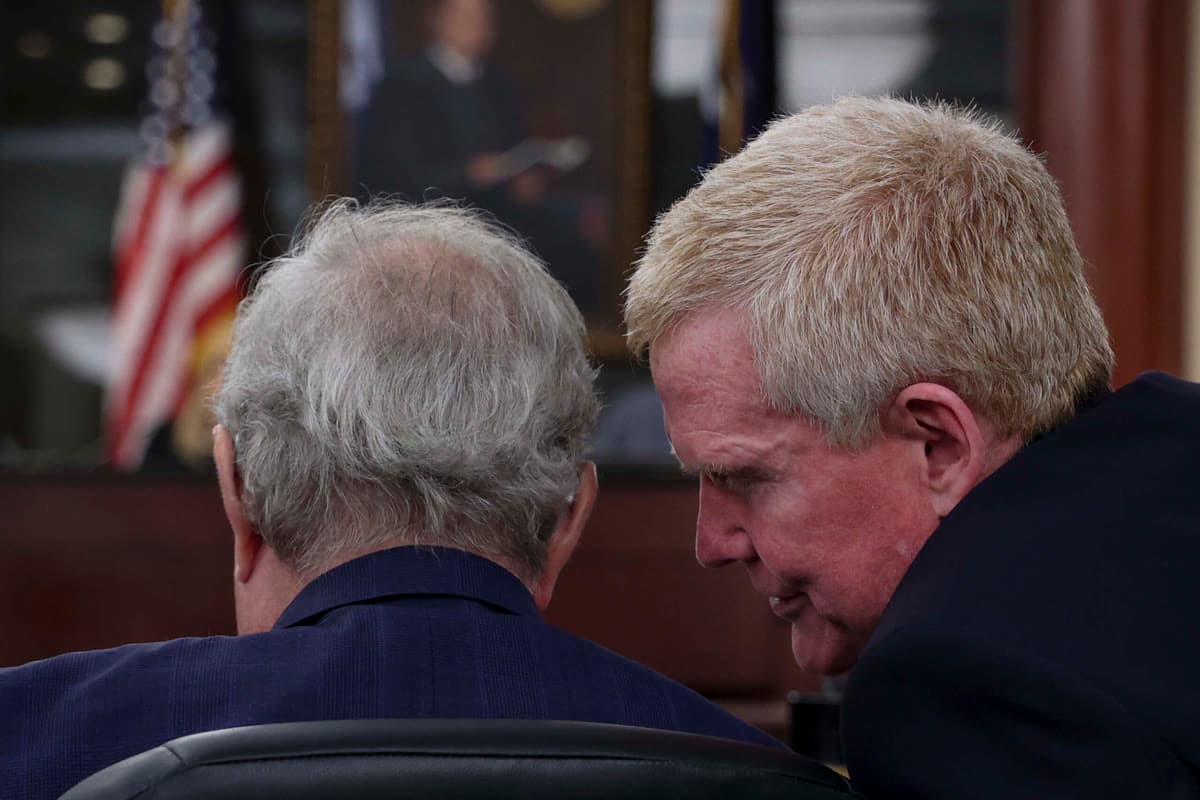
A motion to compel is a request. It is not an order, and it is not a new verdict. On Sept. 18, 2026, Alex Murdaugh's lawyers asked the court to make the State produce fingernail and phone DNA, .300 Blackout ballistic records, and the raw FARO scan of Moselle before a retrial set for April 5, 2027. The defense says the next DNA step would consume what remains, and that the kennel is gone so nobody can scan it again. Those pieces are irreplaceable. They should be preserved, or tested under an order that says who may touch them, before the April date does the deciding.
The motion is captioned in the Court of General Sessions for Sumter County, in the Third Judicial Circuit, on Colleton County indictment numbers 2022-GS-15-00592, -593, -594, and -595. It was file-stamped Sept. 18, 2026, at 3:54 p.m. in Colleton County General Sessions under the name Gary Hale. Richard A. Harpootlian, Phillip D. Barber, Andrew R. Hand, James M. Griffin, and Margaret N. Fox signed it. The motion says Murdaugh has been in custody since October 2021, that a 2023 jury convicted him and the court sentenced him to two consecutive life terms, and that the South Carolina Supreme Court vacated that verdict because the clerk of court tampered with the jury. A vacated verdict is not an acquittal. He is presumed innocent at the retrial.
On Aug. 14, 2026, the court heard an earlier defense motion to send fingernail DNA to Othram. The Sept. 18 motion quotes the court: "I'm going to grant your motion. I'm gonna let you take it. The leftover, the new." The same passage, as the defense sets it out, required a chain of custody, a quantitation, and a report back before further testing. That is not an order letting the samples be used up. Phillip Barber's Sept. 11 letter to Senior Assistant Deputy Attorney General S. Creighton Waters reported Othram's quantitation of Items 70 and 71, Maggie Murdaugh's left- and right-hand fingernail clippings. The letter says those figures are a summary of quantitation results, not a forensic report, that a male contributor is represented in the two extracts SLED had already tested, and that further testing will consume the samples and may require combining the extracts so nothing remains. The motion puts the Y-chromosome concentration at 0.001 nanograms per microliter for the Item 70 extract and 0.002 for Item 71, and it says the untested reserve clippings showed no detectable Y target. Waters answered on Sept. 17. His letter says the Attorney General's office consulted SLED. It says Dr. Mittleman of Othram — the defense motion names Dr. David Mittelman — said on a call that any Y target was extremely low, that the material was "pretty much a sole source sample from Maggie," and that further testing would be "high risk" and unlikely to produce anything usable. Waters wrote that the reserve samples showed a Y concentration of 0.000, and he withheld consent until the defense says what test it wants, why, and which extracts would be combined. The defense calls that demand work product and asks the court to allow the testing without that preview. The letters are positions. They are not a ruling.
The motion argues that SLED's June 25, 2021 DNA report does not match the lab's June 16, 2021 worksheets. As the motion describes the report, Item 70 was a two-person mixture, fourteen named people including Paul Murdaugh and Alex Murdaugh were excluded, and the profile was about eleven times more likely if Maggie Murdaugh and an unidentified person contributed than if Maggie and Claude Rowe did. Item 71 was one sentence: "The DNA profile developed is attributable to Margaret Murdaugh." Item 25.1, swabs from the sides of her phone, was a partial profile, and the report said that because of limited information and the inability to determine the number of contributors, "no further interpretation will be offered." A Nov. 2, 2022 supplemental report, the motion says, excluded Curtis Edward Smith from Item 70 and said nothing about Item 71 or Item 25.1. The motion says the June 16 worksheet recorded more male DNA in the right-hand clippings than in the left, and that SLED did not run Y-chromosome testing on any of the three items. It also says the 2023 jury was told the phone was Paul's, and that the phone was Maggie's, found in the grass beside Moselle Road roughly half a mile from the kennels. That is the defense reading of the worksheets and the trial record. It is not a finding that the 2021 report was wrong. On the phone swabs, Waters wrote that about one quarter of each swab remains, plus 10 microliters of extract, and that SLED "has the electropherograms from this test that can be shared." The motion asks the court to freeze that material, transfer it to Othram under a chain of custody, and order the electropherograms, bench notes, review records, and the files on the decisions not to run Y-STR testing, not to attempt a STRmix deconvolution of Item 25.1, and not to enter those profiles in CODIS.
Barber's Sept. 11 letter asked six questions about other .300 Blackout shootings in the Second and Fourteenth Judicial Circuits since Jan. 1, 2021. Part of the ask is what the defense says it understands from public reporting: that cartridge cases from the April 25, 2026 homicide of Frank Alexander Brown III in Allendale were entered in a ballistic database on Aug. 13, 2026, and that Brown had lived in Islandton, near Moselle. That understanding is not a match. The letter also asked about the April 27, 2024 shooting of Allendale Police Sergeant James Hall Jr. Waters's Sept. 17 letter says that since January 2021 SLED has entered 720 .300 Blackout cartridge cases into IBIS, including evidence from this case, and that each entry is compared with the others, including the cartridge cases from the murders of Maggie and Paul. The letter says .300 Blackout "has been identified the second most popular cartridge for AR chambering in the United States, behind only 5.56/.223," and that SLED gets those cases "on a weekly, if not daily, basis." It says SLED has generated more than 15,000 IBIS leads since the program began and that "none have linked back to this case." It says the claim that a .300 Blackout was used in the Hall shooting is wrong. It says a .300 Blackout was used in two Allendale shootings earlier that same day, that evidence was entered into IBIS, and that it "did not generate any lead or link to the murders of Maggie and Paul." It says SLED will object to turning over cartridge cases from other Allendale cases because those investigations "remain open and ongoing." The defense motion says that letter answers none of the six questions. It sets the letter against 2023 testimony the motion quotes from case agent Croft, including that .300 Blackout weapons "were just not that common," and that he answered "I have none" when asked how many murder investigations he had worked in which a .300 Blackout was the murder round. The motion also quotes Waters's closing: "A family Blackout killed Maggie." Trial testimony and a closing argument are not findings on this motion. The relief requested is a list of .300 Blackout shootings in the named counties since Jan. 1, 2021, the IBIS and NIBIN records for the Moselle cases and for the Brown and April 27, 2024 Allendale cases, a defense examiner's comparison under a protective order, and what the motion calls Giglio material on what SLED had on the caliber as of Jan. 23, 2023. A request to open other cases is not an order opening them.
On Sept. 15, 2026, Harpootlian wrote Waters that the Nov. 3, 2022 production was a 2.69-gigabyte SCENE 2go viewer file labeled CS_Faro, not the raw .fls scan files, and he asked the State to say in writing whether the raw data still exist. The motion says the State has not answered. It says SLED scanned Moselle with a FARO laser scanner, that the kennel area has since been demolished, and that no new scan can be made. Demolition is the defense's statement. The motion asks for the raw files, the SCENE project and registration data, panoramic images, the scanner's make, model, and serial number, the dates, times, and operator, processing logs, and hash values. If the data are gone, it asks who lost them, when, how, and under what authority, and it reserves a later remedy. It asks that any production be finished within ten days of an order, and in any event before a DNA hearing the defense says the court directed be held before Nov. 13, 2026. A date in a prayer for relief is not a deadline the court has set. The motion says Othram needs 60 to 90 days once it has the fingernail material. The court has not granted this motion.
Shop
Checkout is on Shopify. A few from the rack:
More on the desk

By Crime Talk Network Staff Writer
Tuscaloosa police charged Daronte Collins with felony murder after a Saturday apartment-complex shooting.
WBRC's jail photo is captioned Daronte Collins and puts both men at 22. The Tuscaloosa Thread, citing Violent Crimes Unit Lt. Michael Hall, spells the charged man Deronte and puts both at 20. Patch and the Calhoun Journal also use Daronte and 20. A felony-murder count, which the Thread and the Journal describe as Alabama's rule when someone dies during a robbery, is not a finding that Collins fired the shot that killed Tyson. The Thread says the 25-year-old has not been charged.
Read the take
Reporting noted by WBRC, Tuscaloosa Thread, Calhoun Journal, and Tuscaloosa Patch.
By Crime Talk Network Staff Writer
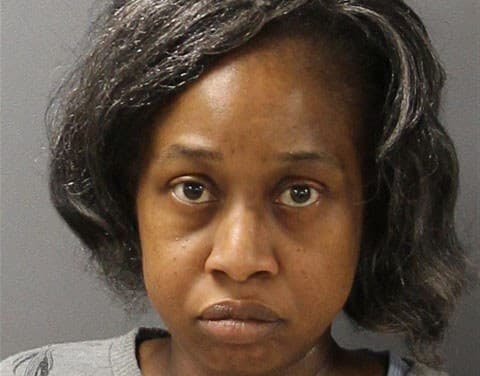
High Point police charged Kymberli Bowden with first-degree murder in her 13-year-old daughter's death.
The Oct. 8 release is a new murder count on a case the department charged in 2025 as felony child abuse and concealment of death. It is not a trial. The murder-charge release says she remains in jail with no bond. WXII reported a violent-offense hold and a $1 million bond on the older counts. The 2025 release listed her age as 44. The murder-charge release, WXII, and FOX 35 Orlando list 45.
Read the take
Reporting noted by High Point Police Department, WXII, FOX 35 Orlando, and News & Observer.

By Crime Talk Network Staff Writer
Chicago police charged Chevazz Campbell in the stabbing death of CTA janitor Julian Mobley.
A detention hearing is the first court date. It is not a finding that Campbell stabbed anyone. The department's Sunday release says he robbed and fatally stabbed a 41-year-old man in the 2000 block of West Lake Street. ABC7 and CBS Chicago name that man as Julian Mobley and describe a fare dispute that turned into a stabbing. The department's charge list and CBS Chicago's shorter summary do not match count for count.
Read the take
Reporting noted by Chicago Police Department, ABC7 Chicago, and CBS Chicago.