
True Crime
Jurors in Miguel Salguero-Olivares's trial heard a rum bottle and a medical examiner on the third day of testimony.
WRAL reported that on Friday, Oct. 9, 2026, Chapel Hill forensic technician Tamika Price displayed a Bacardi bottle that prosecutors say was the weapon in the September 2012 killing of a 19-year-old UNC-Chapel Hill student. ABC11 reported that medical examiner Lauren Scott testified the student died of blunt-force trauma to the head. Court ended early and resumes Monday at 9:30 a.m. Opening statements were Wednesday.
By Crime Talk Network Staff Writer · · Updated
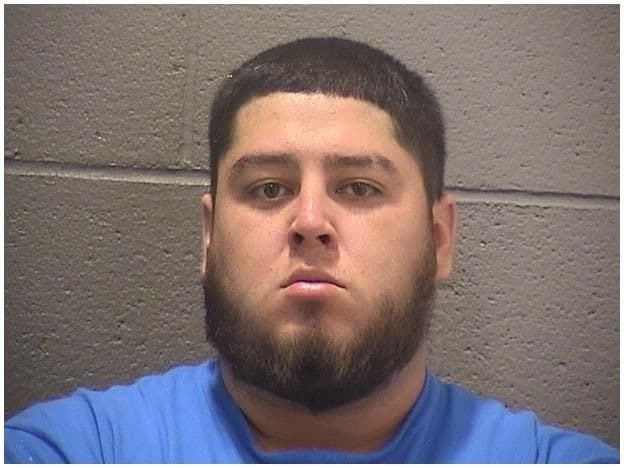
Friday's witnesses were on the stand to identify an object and a cause of death. That testimony is evidence. It is not a verdict. WRAL reported Price showed jurors the bottle prosecutors say was used in the killing. ABC11 reported Scott said blunt-force trauma to the head caused the death, and that the defense pressed her on how fast that death could occur. The jury comes back Monday. The charges, which include rape and a sexual offense, are still the charges.
WRAL and ABC11 reported that opening statements began Wednesday morning, Oct. 7, 2026, in Durham in the trial of Miguel Enrique Salguero-Olivares, charged in the death of a 19-year-old University of North Carolina at Chapel Hill student who was found beaten to death in her off-campus apartment on Sept. 7, 2012. ABC11 reported that lawyers spent eight days seating 12 jurors and four alternates, and that the last alternate was chosen Wednesday morning. The Daily Tar Heel reported he is charged with first-degree murder, first-degree burglary, first-degree rape, and first-degree sexual offense. Chapel Hill police announced his arrest on Sept. 16, 2021, after investigators used DNA ancestry work to identify relatives who helped point them to him, ABC11 reported. An arrest nine years later is an accusation built on a lab match. A jury decides what that match proves.
WRAL reported that Durham Assistant District Attorney Angela Garcia-LaMarca told jurors, "The evidence in this case is louder than the noise around it," and, "Listen to the evidence." She said investigators found the defendant's DNA on several items at the scene, including the bottle prosecutors say was used in the killing, clothing, and a food bag, that his DNA was recovered from the student's body, and that his palm and thumb prints were on another bottle in the apartment. She said investigators had a single male DNA profile within weeks but did not know whose it was, and that the two were strangers. "The fact that he is a stranger is the reason it took years to find him," she said, according to WRAL. She told jurors his brother-in-law will testify that he came to North Carolina in 2010, worked at an Outback Steakhouse in Durham, and had family members living in the same apartment complex. "This case is not complicated," she said. "It's devastating. It's horrifying." That is the state's road map. It is not yet testimony.
Defense attorney James Rainsford answered with the prosecutor's own word, WRAL reported, arguing that what she called noise is reasonable doubt. He told jurors the DNA is not as clear as the state claims, that profiles on several items came from multiple people, and that finding someone's DNA does not prove when it was left. "Finding something doesn't mean a crime occurred," he said. "You have to connect them." He questioned how police collected and handled evidence and challenged the claim that a rum bottle was the weapon. "Make them prove it," he told jurors. He also pointed to a voicemail a friend left for Chapel Hill police after the body was found, saying the student's roommate had blood on her hand when she got into his car that morning, and to blood evidence the lawyers argued about before trial that is now missing. The roommate is not charged. Pointing at another person is a defense theory for the jury to test, and it is not a finding about anyone.
The legal fight is about time and connection. A DNA match can put a person's genetic material at a scene. By itself it does not say when the material was left or how it got there, and that is the gap Rainsford asked jurors to watch. Garcia-LaMarca answered in advance with a stranger theory: if the two never knew each other, there is no innocent explanation for his DNA in her bedroom, and the prints and the brother-in-law's testimony are meant to place him nearby. Which of those accounts survives cross-examination is what the next weeks decide. WRAL reported that the state's first witness after openings was a member of the student's family.
Friday, Oct. 9, was the third day of testimony. WRAL reported that Price, a Chapel Hill Police forensic evidence technician, returned to the stand and that prosecutors showed crime-scene video and photographs. Price identified a bottle in those photographs. "This depicts the Bacardi Peach Red bottle," she said, according to WRAL. "This bottle was intertwined in the black comforter when the comforter was pulled back. Once the comforter was pulled back that bottle was collected and placed in an evidence bag." WRAL reported she then carried the bottle in front of the jury. Showing jurors an object from an evidence bag identifies the object. It does not, by itself, prove how it was used. That is the point Rainsford put to the jury on Wednesday when he said, "Make them prove it."
ABC11 reported that Friday afternoon Dr. Lauren Scott, an associate chief medical examiner, testified about the autopsy she performed on Sept. 8, 2012. She said the student died of blunt-force trauma to the head and described lacerations on the scalp, forehead, and face, bruising, and bleeding around the brain. ABC11 reported the defense asked how quickly someone could die from that trauma. Scott said seconds to minutes. When the defense noted that her report said "seconds" and asked whether that remained her opinion, she said yes. ABC11 reported she also testified that a sexual-assault examination found no injuries, and that the absence of lacerations did not rule an assault out. The student is not named here. The charges include rape and a sexual offense. ABC11 reported the judge broke for the graphic testimony, that some jurors cried, and that court ended early. Testimony resumes Monday at 9:30 a.m. A cause of death from the witness stand is evidence for the jury. It is not the verdict. All defendants are presumed innocent until proven guilty in a court of law.
Shop
Checkout is on Shopify. A few from the rack:
More on the desk
By Crime Talk Network Staff Writer
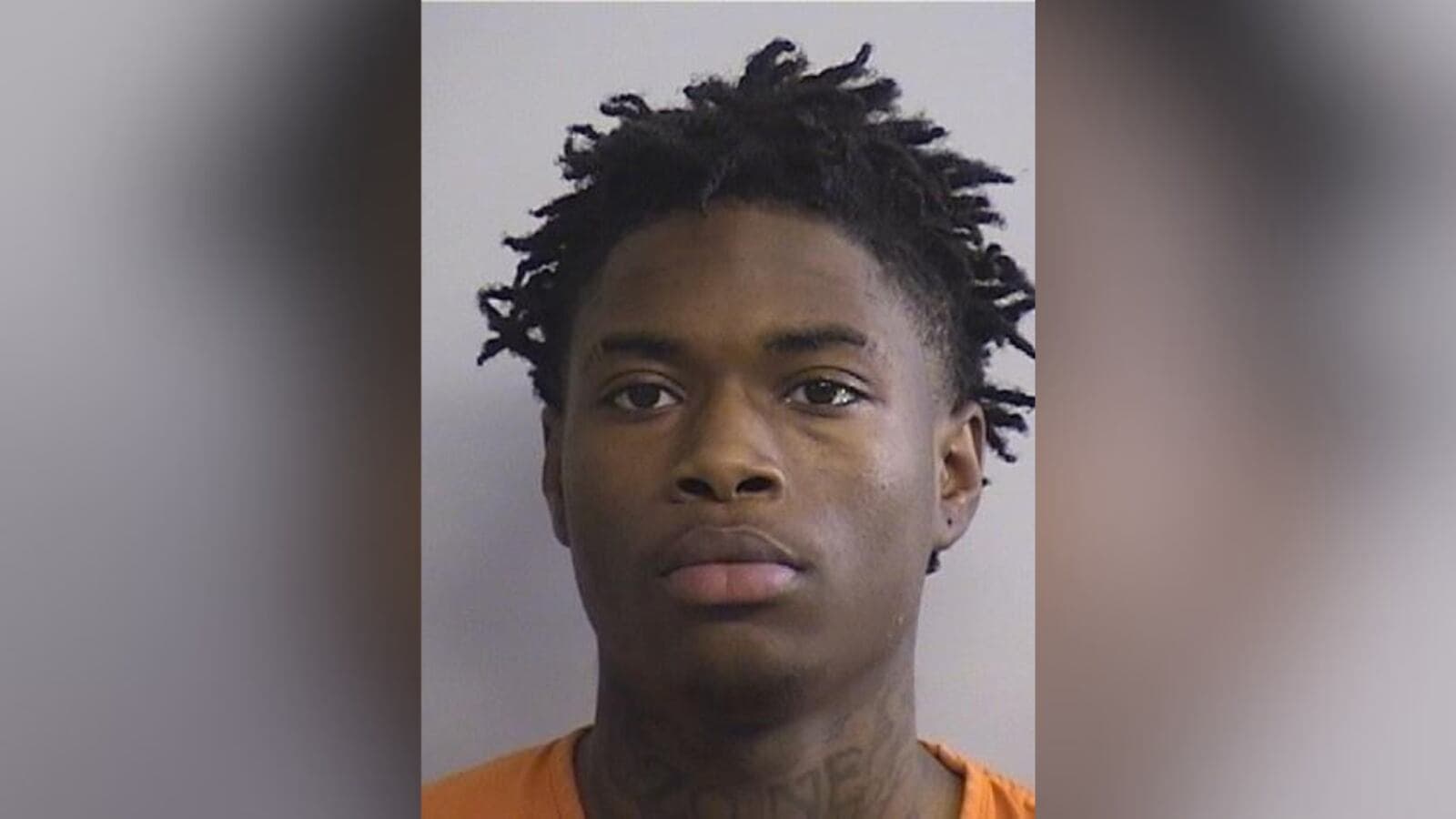
Tuscaloosa police charged Daronte Collins with felony murder after a Saturday apartment-complex shooting.
WBRC's jail photo is captioned Daronte Collins and puts both men at 22. The Tuscaloosa Thread, citing Violent Crimes Unit Lt. Michael Hall, spells the charged man Deronte and puts both at 20. Patch and the Calhoun Journal also use Daronte and 20. A felony-murder count, which the Thread and the Journal describe as Alabama's rule when someone dies during a robbery, is not a finding that Collins fired the shot that killed Tyson. The Thread says the 25-year-old has not been charged.
Read the take
Reporting noted by WBRC, Tuscaloosa Thread, Calhoun Journal, and Tuscaloosa Patch.
By Crime Talk Network Staff Writer
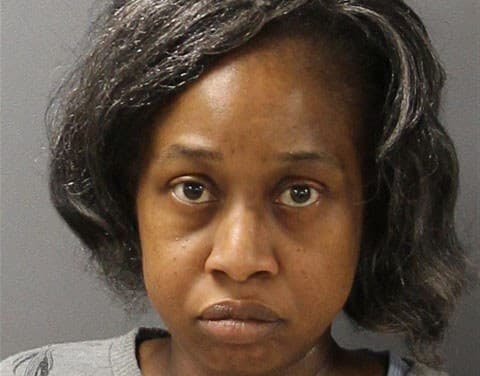
High Point police charged Kymberli Bowden with first-degree murder in her 13-year-old daughter's death.
The Oct. 8 release is a new murder count on a case the department charged in 2025 as felony child abuse and concealment of death. It is not a trial. The murder-charge release says she remains in jail with no bond. WXII reported a violent-offense hold and a $1 million bond on the older counts. The 2025 release listed her age as 44. The murder-charge release, WXII, and FOX 35 Orlando list 45.
Read the take
Reporting noted by High Point Police Department, WXII, FOX 35 Orlando, and News & Observer.
By Crime Talk Network Staff Writer
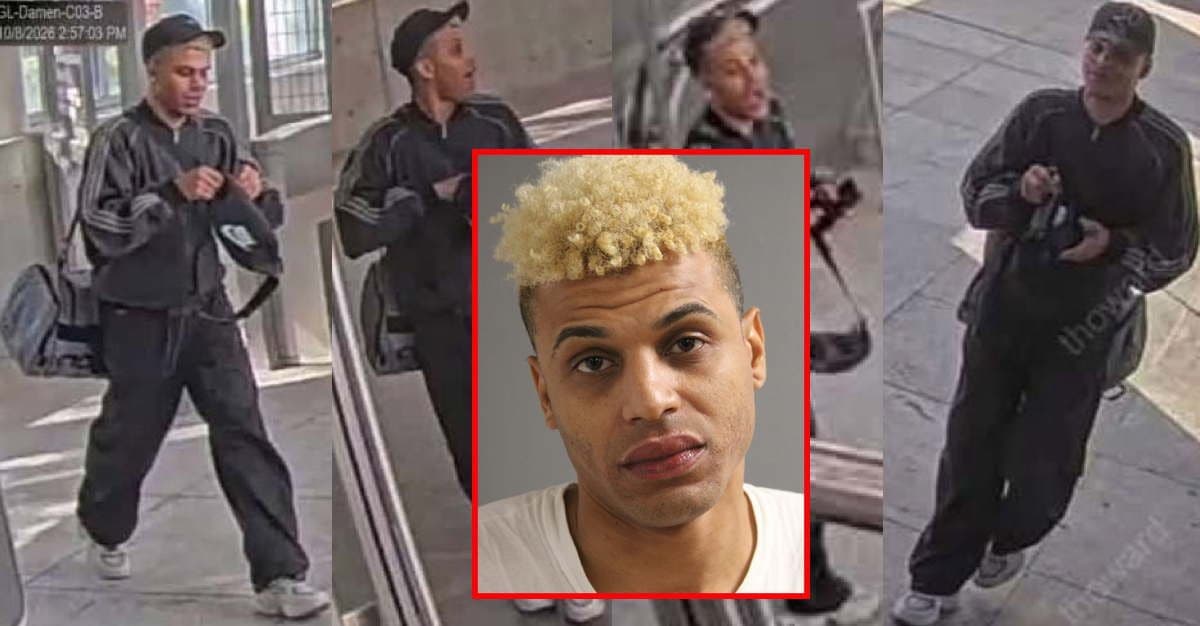
Chicago police charged Chevazz Campbell in the stabbing death of CTA janitor Julian Mobley.
A detention hearing is the first court date. It is not a finding that Campbell stabbed anyone. The department's Sunday release says he robbed and fatally stabbed a 41-year-old man in the 2000 block of West Lake Street. ABC7 and CBS Chicago name that man as Julian Mobley and describe a fare dispute that turned into a stabbing. The department's charge list and CBS Chicago's shorter summary do not match count for count.
Read the take
Reporting noted by Chicago Police Department, ABC7 Chicago, and CBS Chicago.